
If you’re planning a new deck in West Michigan, choosing the right decking material can have a major impact on how your space looks, how much maintenance it requires, and how it holds up over time. Two of the most popular deck options that provide great value in all of these areas are composite and PVC decking.
Both offer significant advantages over traditional treated lumber decking, including their much longer lifespan, their larger variety of colors and designs, and their no-maintenance performance.
Below we get into the differences between composite and PVC, and how to choose which is best for your outdoor design.
PVC vs. Composite Decking: Materials, Appearance, Maintenance, & Performance Compared
PVC vs. Composite Deck Boards
The biggest difference between composite and PVC decking is simple: composite contains wood fibers, while PVC does not.
Composite deck boards are made from a combination of wood fibers and plastic polymers. Modern composite decking is also capped with a protective polymer layer that helps keep moisture, stains, and UV exposure away from the core of the board.
PVC deck boards are completely wood-free, and made from high-performance polymers. Without any organic material in the board, there’s nothing there to absorb water and eventually deteriorate.
PRO TIP: Don’t stop your comparison at “PVC vs. composite.” Ask what the actual board is made of, how many sides are capped, what protects the core, and what the manufacturer warrants. This is where we recommend the TimberTech (Composite and Advanced PVC/AZEK) product lines as standouts in both composite and PVC decking.
TimberTech Composite:
- Proprietary 4-sided capping on select lines
- 25- or 30-year Fade & Stain Limited Warranty on select collections
- Realistic wood looks
TimberTech Advanced PVC:
- Proprietary 4-sided capping on select lines
- Wood-free for moisture-rich environments
- 50-year Fade & Stain Limited Warranty on select collections
- Up to 30 degrees cooler on sunny days
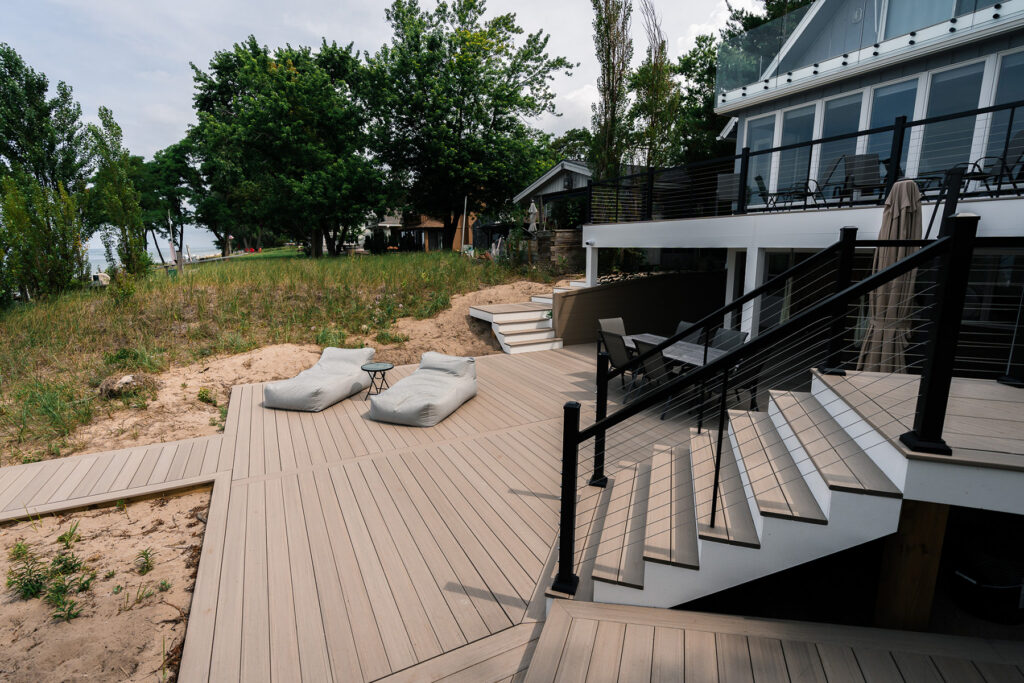
TimberTech’s 4-sided protective cap protects the deck boards from UV exposure, moisture, and stains.
Appearance & Design Options
Both PVC and composite decking can provide a very realistic alternative to natural wood. In our experience, both TimberTech and Millboard really stand out for the looks of their PVC and composite products. Millboard decking is a composite product that is hand-molded from real oak boards to give one of the most realistic grain patterns available in a composite material. TimberTech decking offers multiple collections that range from subtle, consistent wood grains to more pronounced, multi-tonal patterns that are designed to replicate different types of natural and weathered wood.
Composite decking has traditionally been the go-to for homeowners who want the appearance of natural wood, and today’s higher-end boards can get remarkably close to the real thing. You can find everything from clean, consistent grain patterns to boards with significant variation in color and texture that give the deck a more natural, less uniform appearance.
PVC decking used to be easier to spot as a synthetic material, but that gap has narrowed considerably. Advanced PVC boards now use detailed grain patterns, multi-tonal coloring, and textured finishes to create a much more realistic wood appearance. You can also find PVC in bolder colors and styles when you don’t want the deck to look like wood at all.
PRO TIP: Don’t overlook PVC if you want a look that goes beyond traditional wood tones. Its wider range of colors and finishes can make it a better fit for decks where a wood-grain appearance isn’t the goal.
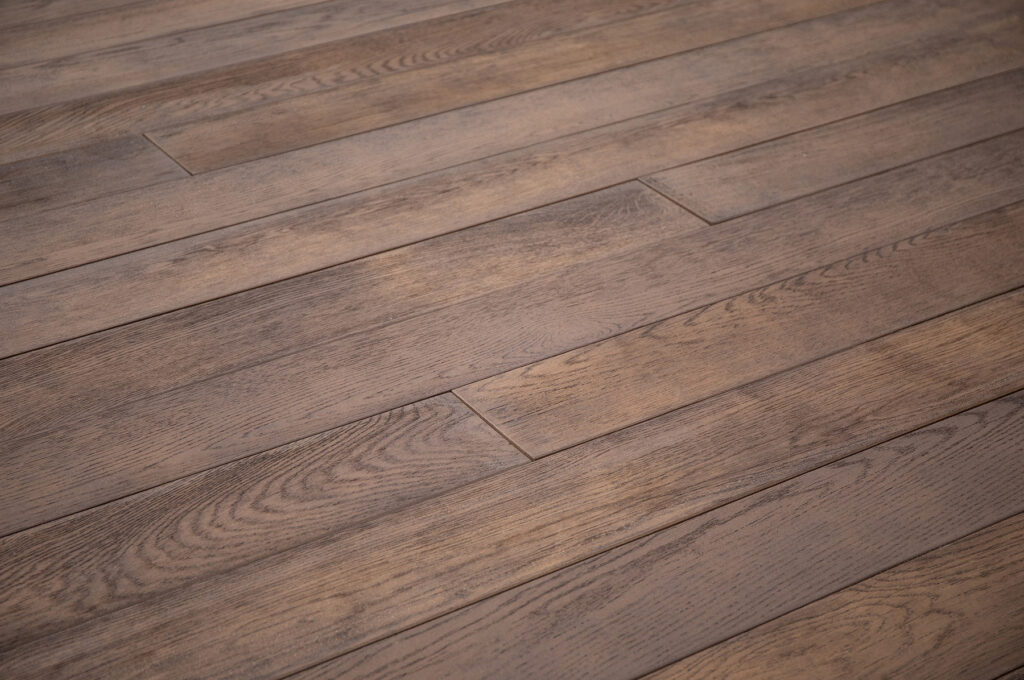
Millboard’s real wood looks are a result of hand-molding from real oak boards.
Durability & Lifespan
Compared to treated lumber decks, which last about 10–15 years even with regular staining and sealing, both composite and PVC offer a significantly longer lifespan.
Composite decking generally lasts about 25–30 years when properly installed. Because these boards are resistant to rotting, splintering, and insect damage, and they do not require staining or sealing, they maintain their appearance with very little upkeep required, so you can effortlessly enjoy your deck for many years.
PVC decking offers a lifespan of 30+ years. With no organic materials in the board, PVC is not susceptible to rot or mold in the way that wood is, and gives you extra assurance especially in wet environments. This makes PVC a great option where moisture is unavoidable, like pool decks, lakefront decks, and custom beach stairs. The boards can get wet over and over again without having wood fibers in the core that can absorb that moisture.
PRO TIP: Don’t assume that every composite or PVC deck board performs the same way. Manufacturing processes, protective capping, surface finishes, and warranties can all vary between brands. We recommend the TimberTech product for its full 4-sided capping system and its great warranties of up to 50 years on select products.
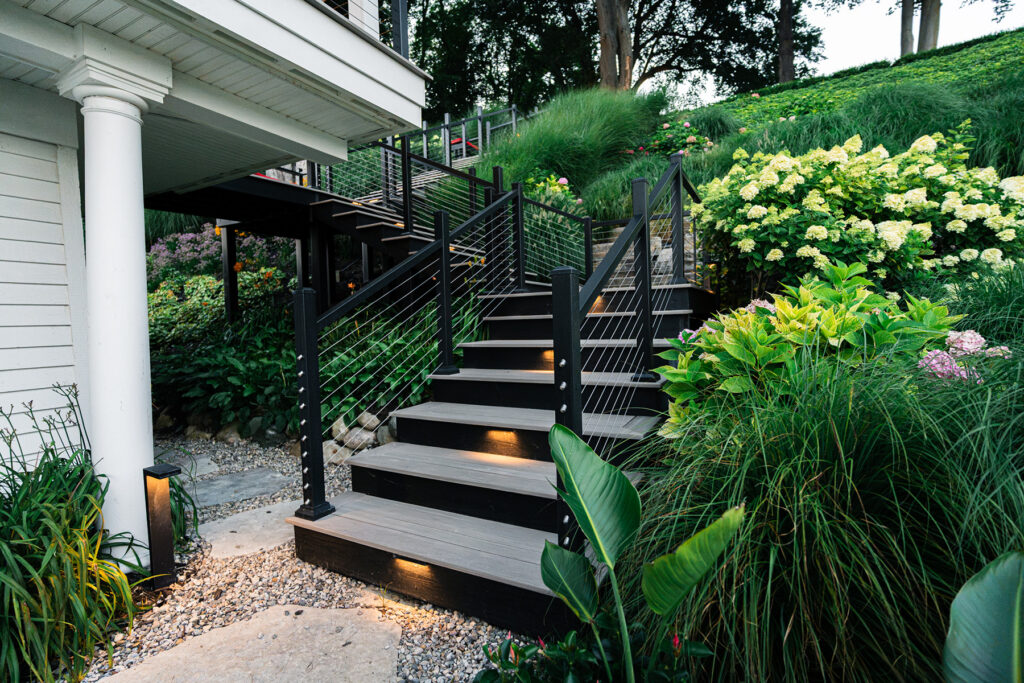
These custom beach stairs we built in Spring Lake, MI, have unbeatable moisture resistance over their long lifespan thanks to TimberTech Advanced PVC.
Maintenance Requirements
Low maintenance is one of the biggest reasons homeowners choose composite or PVC decking over treated lumber. Both composite and PVC decking eliminate the routine staining and sealing required by traditional wood, helping homeowners spend less time maintaining their deck and more time enjoying it.
Composite decking generally requires occasional cleaning to remove dirt, pollen, and leaves. Because composite boards contain wood fibers, spills and organic buildup should be cleaned when needed to help preserve the deck’s appearance and prevent staining or mildew.
PVC decking is also easy to clean with occasional soap-and-water washing. Because it contains no organic wood fibers, it does not absorb any moisture, and is even less vulnerable to moisture-related deterioration and mildew.
PRO TIP: If your deck will be exposed to frequent moisture, pool water, or heavy organic buildup, PVC may be the better choice. Composite can still perform well in these settings, but PVC offers an added layer of moisture resistance that can make long-term maintenance easier.
Scratch, Stain, & Fade Resistance
One of the biggest differences between composite and PVC decking and traditional wood is how the surface handles everyday wear. Your deck is going to get spilled on, walked across, and exposed to the sun. How well the surface handles those things will have a lot to do with how the deck looks several years after it’s installed.
Both composite and PVC decking are designed to resist common problems like staining and fading, but the level of protection depends on the specific product. This is where the protective cap becomes important. On capped decking, the outer layer is designed to protect the board from UV exposure, moisture, stains, and everyday wear.
Composite decking can offer very good scratch, stain, and fade resistance, particularly with a high-quality capped product. However, composite products aren’t all manufactured the same way. When comparing composite brands, consider how they’re made, not just how they look or how much they cost.
PVC decking also offers excellent surface protection, and its wood-free construction gives it an additional advantage when it comes to moisture. Premium PVC products are designed to resist staining and fading while maintaining the appearance of the board over years of exposure to the elements.
This is also where composite and PVC are different from wood in a way that’s easy to overlook. If you scratch a wood deck, you can generally sand the damaged area and refinish the board. You can’t treat composite or PVC the same way. Sanding the surface can damage the protective cap and change the appearance of the board. So with synthetic decking, you want to start with a product that has a durable surface rather than planning to repair the surface later.
PRO TIP: Fade resistance is especially important for a deck that gets a lot of direct sun. Look at the deck manufacturer’s fade warranty when comparing products so you know what level of color retention you’re actually getting. For example, select TimberTech Advanced PVC products come with a 50-Year Fade & Stain Limited Warranty, which is one of the reasons we like the product for homeowners who are making a long-term investment in their outdoor space.
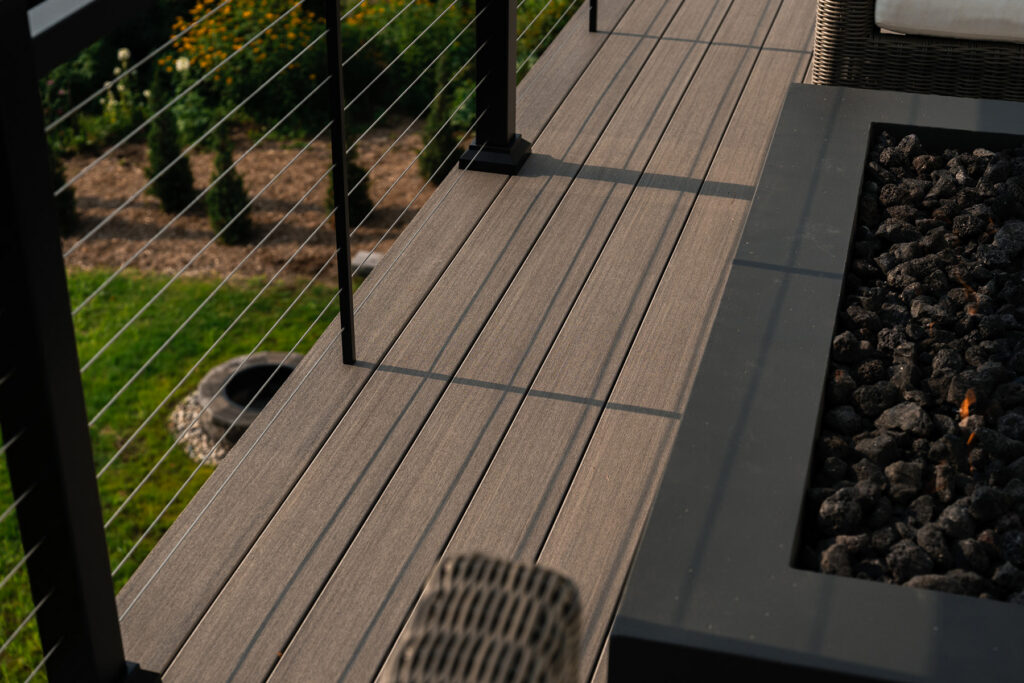
The protective cap on composite decking is designed to protect the board from fading, moisture, stains, and everyday wear.
Costs
Cost is one of the biggest differences homeowners will notice when comparing composite and PVC decking. Both are more of an investment upfront than basic treated lumber, but they also eliminate many of the recurring costs and maintenance that come with wood decking.
Composite decking generally gives homeowners more flexibility when it comes to budget. There are multiple collections and price levels available from leading manufacturers, so you can choose a product based on the look and performance you want without automatically moving into the highest-end decking available.
PVC decking typically comes at a higher upfront cost than composite. The additional cost reflects the material itself, along with features such as its moisture resistance and premium surface protection. For a lot of homeowners, those benefits are worth paying more for upfront, particularly when the deck will see a lot of moisture or direct sunlight.
PRO TIP: Composite is often the better value if you’re looking for premium, low-maintenance decking without pushing the material cost higher than you need to. PVC is worth considering when you’re willing to spend more upfront for an even longer lifespan and specific performance advantages, especially on lakeshore decks.
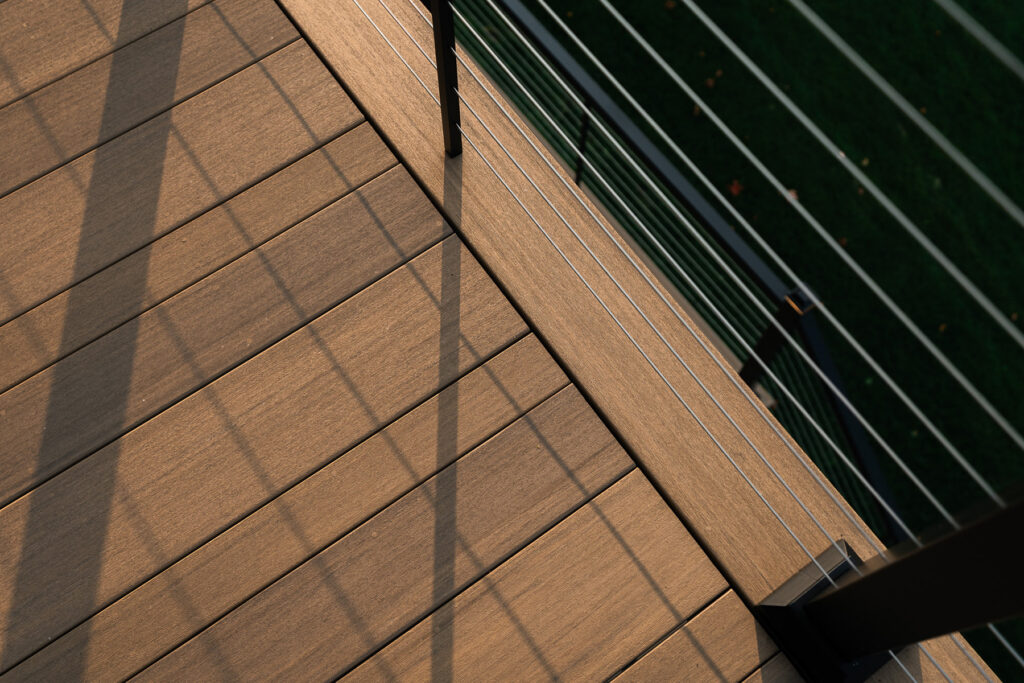
PVC decking offers many performance advantages, especially on lakeshore decks that see frequent moisture and heavy sun exposure.
PVC vs. Composite Decking: Which is Better for My Outdoor Design?
The decision between PVC and composite comes down to your priorities rather than choosing a universally “better” material.
Composite decking is a good fit if you:
- Want a low-maintenance alternative to wood
- Prefer the look and feel of composite decking
- Are working within a specific material budget
PVC decking is a good fit if you:
- Are building near a pool or other water feature and want maximum resistance to moisture
- Prefer a premium, no-maintenance decking material
- Want lower heat retention under direct sun
- Place a high value on durability and stain resistance
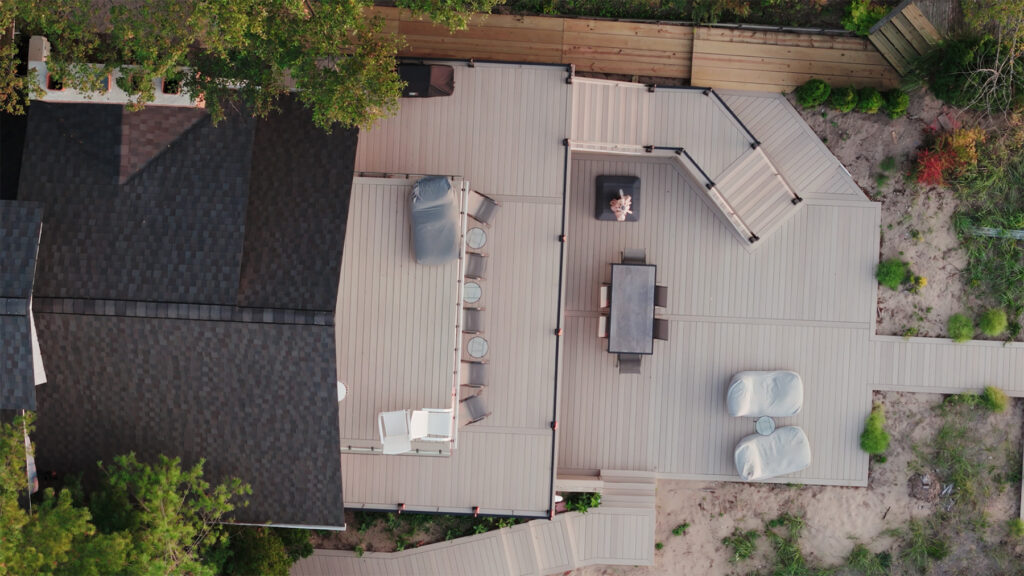
Design Your Deck With Lakeshore Customs
Composite & PVC Deck Builders in West Michigan
At Lakeshore Customs, we work with the industry’s best composite and PVC products because they meet the high standards our customers deserve. The TimberTech and Millboard decks we build keep their looks for decades through Michigan’s changing seasons.
Our clients are making significant investments in their homes, and our commitment to them is providing long-lasting, high-end outdoor spaces that hold up over time and can be enjoyed for many years to come.
Explore Custom Deck Options | Call (616) 994-2215
Reviews from Happy Homeowners
“Mason, Clayton, Elliot and the entire Lakeshore team completed an extensive multiple deck rehab for us and it came out spectacularly! The Lakeshore Customs team is the real deal and anyone in Michigan would be lucky to work with them. Using Timbertech deck and AZEK trim products, our two decks, front porch, garage are pretty near perfect and the product aesthetic is amazing and beautiful! We could not be happier! They also constructed an outdoor kitchen which is stunning (complete with grill, pizza oven and dry storage). This is a great company with tremendous talent and work ethic!” — Paul K.
“Lakeshore Customs replaced our house’s back deck & stairs to the beach with great results. Under brothers Mason & Clayton Kuipers’ leadership, this company is highly professional, knowledgeable, cost-effective, & timely in their work. We had a great summer thanks to them.” — Jamal A.
“What a wonderful experience working with these guys. All my friends have come by and each said the same thing, great work, well built. My project was not easy. Hardworking is an understatement. I can only add: WOW does it look good.” — Greg W.
“Lakeshore Customs did a fantastic job installing beach steps and a new front porch and decking at my cottage. We love their design and execution. They were wonderful to work with and we plan to use them again for another project. Highly recommend!” — Sara G.
“Excellent team. We searched and searched for a company to help us build stairs to our dock, and decided to go with Lakeshore Customs. Can’t recommend them enough! They created our stairs and deck for us and we couldn’t be happier!” — Carla T.